Programs
Programs
Our major sectors of programming include housing and slum upgrading; land tenure security; water, sanitation and hygiene, or WASH; financial literacy for housing; disaster response and preparedness; and housing microfinance.

Savings and financial literacy program
We have mobilized slum dwellers to form savings and loan groups that act as a social safety net, build social capital in the community, and serve as problem-solving networks for residents facing challenges related to housing.More Information

WASH Progarm
Since inception, we have installed 68 communal water stations reaching out to over 61,000 individuals in Lusaka, Kabwe and Ndola’s peri-urban communities. The model of delivery ensures that the community fully participates in the interventions as well as the management of the water points.More Information

Housing and slum upgrading
Habitat considers decent housing to be a fundamental human right and a critical springboard out of poverty. We have partnered with vulnerable families to build
more than 4,000 homes. We either leverage land offered by municipalities for new housing or focus on existing slum areas.More Information
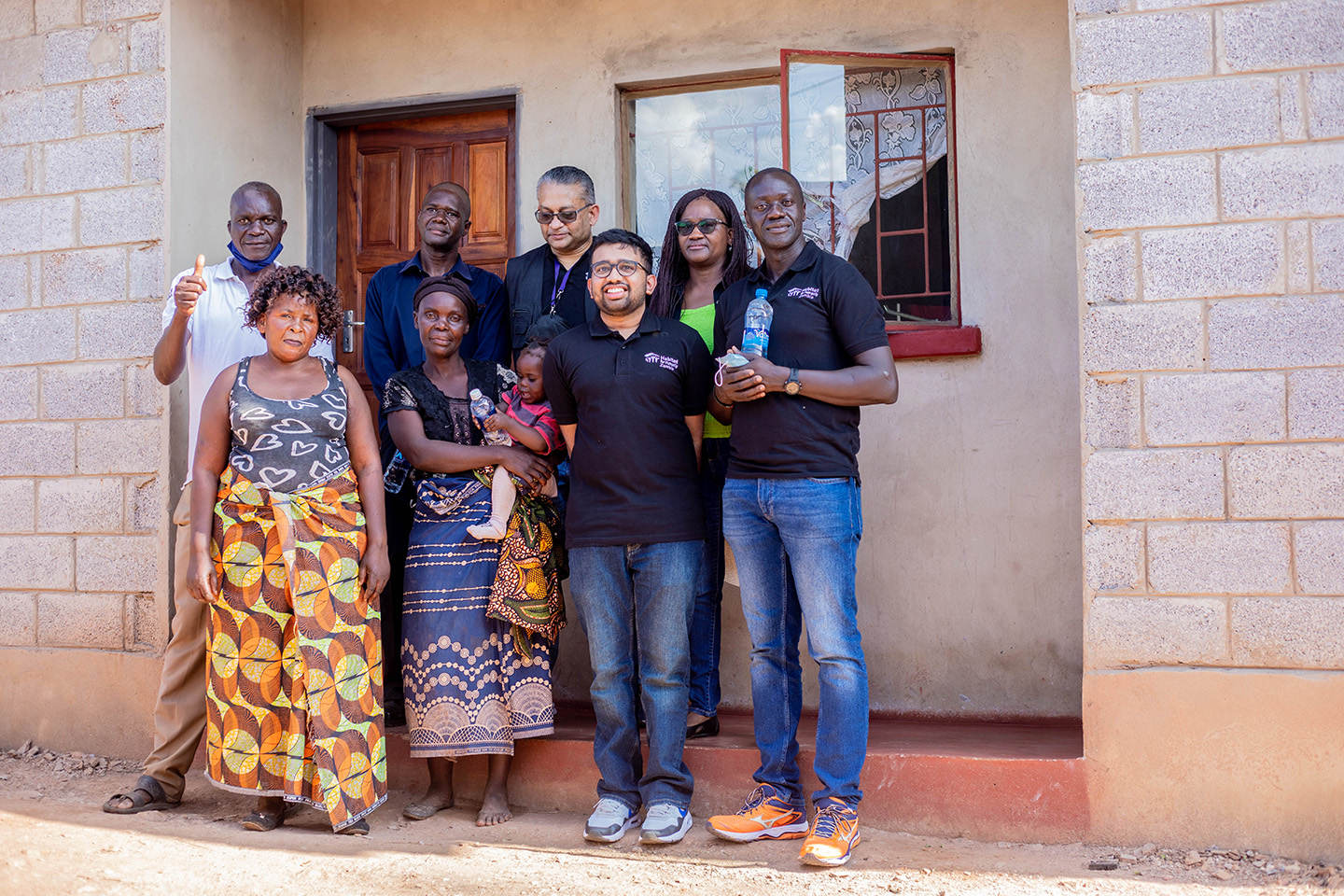
Housing microfinance
The MicroBuild Fund, operated by Habitat’s Terwilliger Center for Innovation in Shelter, is the world’s first housing-focused microfinance investment vehicle dedicated to helping low-income families. The fund lends to microfinance institutions, which in turn provide finance products, including small loans, so that families can build safe, decent and durable homes.More Information

Land tenure security
Land access for the urban poor is a huge challenge in Zambia, where almost 70% of the urban population resides in slums. Without secure land, it is hard to build houses and support infrastructure. Hence, Habitat strongly advocates for administrative tools that speed up the process of accessing land and the documentation that proves land ownership.More Information
Disaster risk reduction
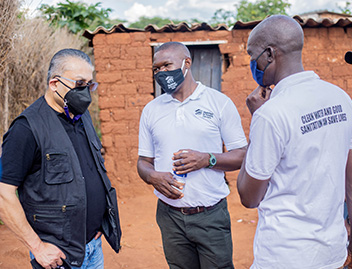
Disaster preparedness is of paramount importance in building resilient and sustainable communities, especially among slum dwellers, who are disproportionately affected by the devastating effects of climate change. Their housing units are often built with cheap materials that do not withstand the heavy rains that have become more intense over the past decade. More Information

Financial literacy for housing
We believe slum dwellers who grow to be financially independent can better address challenges, often together in small groups. As a result, Habitat Zambia has helped mobilize slum dwellers into savings and loan groups that act as a social safety net, build social capital in the community, and serve as problem-solving networks for residents facing challenges related to housing.More Information